
TL; DR
As we embrace the new year, it’s an excellent time to consider the benefits of mindfulness for both horse riders and non-riders. Mindfulness encourages us to focus on the journey rather than just the destination, enhancing our experiences with activities like riding. Practicing mindfulness involves being aware of our surroundings and sensations, like the feel of a horse’s coat or the sounds around us. Incorporating yoga can also enhance mindfulness, helping us become more flexible and present, which benefits both our riding and daily lives. Embrace these practices through equine-assisted therapy to enrich your experiences!
What Changes Occur In the New Year?
 It is now a new year, and with the new year, the thoughts about what we want to change or do differently over the next year are at the forefront of our minds. It’s a time to start over and do something differently or do something better. It is a one-time when transitions and change are something we are more excited about doing. It marks the beginning of yet another season and another change. The new year reminds us that we are constantly changing and evolving.
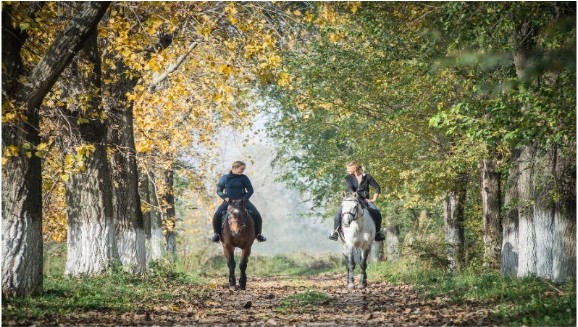
The summer season of being busy and doing lots of things moves on, and we start to prepare for the colder months ahead. So, this is a time of transition and change. If you ride, and even if you do not, get out and enjoy the colors of fall fun. Riding in the woods and walking can give us a reason to pause and take notice of the world around us. You could say it would allow us to be more mindful. I want to expand on the concept of mindfulness and how it can be helpful to horse riders and non-riders alike.
What Does Mindfulness Mean?
You may have heard a lot about the term “mindfulness” recently. But what does it mean to be mindful, and how to do it? Even as an equine therapist in Richmond, when I first heard the term, I thought it was very hard to do. Who has time to be aware? However, over the last several years, it has become a habit to slow down, notice the world around me, and see what I am doing and feeling. Being around horses is helpful to this, as they are intuitive and responsive to the world, including us.
Learning to be mindful is more about enjoying the process and not focusing exclusively on the destination. If you think about focusing on the goal once you have achieved the destination, you must find another one to focus on. Being mindful allows you to focus on getting there on the journey and allows the goal to change and move as needed. In equine therapy, the journey is the focus, and the goal is a by-product.
So, how does this look in practice with riding and other aspects of our lives?
Let’s start with riding. Whether you have been riding for a long time or are just beginning, you have decided to start. You probably set out to say I want to learn to canter, be able to go for a trail ride, go fox hunting, or jump a certain height, or some goal. You may think that would be the end, or think “I achieve that, and I will be happy”.
But, chances are, you achieved that goal and then moved quickly to something else, or maybe you did not accomplish that goal but did something else. Do you remember how you got to that goal? Do you remember the journey to that goal and your steps? Chances are greater that you do not reflect on the journey, as you focused on how long it would take you to get there. And then spent lots of time worrying over the destination.
Focus on the Journey: Mindfulness & Progress
Focusing on the journey asks us to focus on each step to get there. So, the days you rode did not go well, and you felt frustrated and disappointed. It would be less frustrating if we recognized it was only one day and not the end. Being mindful asks us to take the time to feel each experience and enjoy it. So you go out to ride instead of rushing to tack up and worrying about all the things that have not happened or that you did not do to prepare for the lesson or ride. Instead, you stop for a moment or two as you brush your horse to feel the brush in your hand and its fur as you touch it.
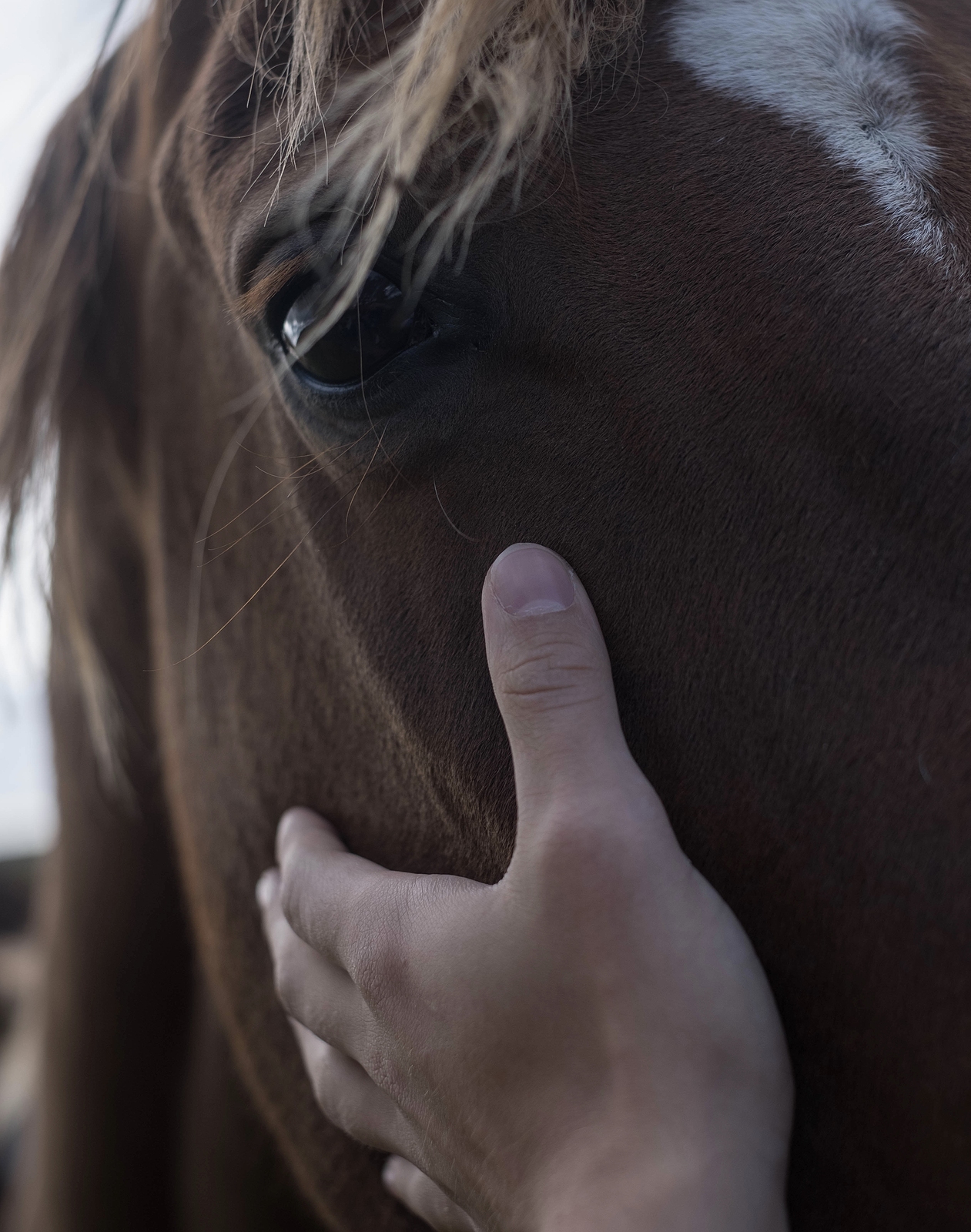 Does it change texture as you brush it?
- What are the sounds it makes against the horse?
- How does your horse’s breathing sound?
- What does your life sound like?
Just noticing these smaller things can help us be more aware of our environment.
Breathing is essential not only to survival but also to getting us to be mindful of our bodies. Take a proper deep breath and see how different you feel. You may find your horse will take one with you and allow you to connect with them even more. What are the things you notice as you ride?
- What sounds do you hear, and what does the saddle feel like?
- How much pressure do you have in the stirrups and your feet?
- How tightly are you holding the reins?
- Which foot is your horse about to pick up?
At Gray Horse Counseling, I often remind clients that being mindful is not about stopping riding or life. It is about noticing and appreciating riding and life. If you are driving to work and you ask what does the seat feel like? What sounds do I hear: the radio, the road, the kids, or friends in the car? How tightly am I holding the steering wheel? What is my breathing like? Can I wiggle my toes and feel my feet?
Again, we do not stop what we are doing. We notice what we are doing and do not judge what we are doing. Doing these simple things can make significant changes. This will take practice, and this will take time. This will also take a conscious effort to do for a while, and then it will come more efficiently and more naturally. This focuses on the journey; as we stay on the trip, we will reach many destinations and enjoy every step.
Embrace Flexibility
What I have described so far requires flexibility in our thinking and transitioning in our approach. As riders and humans, we need to move and stretch our muscles, and one of the best ways I have found to do this is to start with yoga. Yoga requires concentration in the moment and encourages breathing. When I started yoga, I thought it was simple and easy, and I quickly learned that it requires so much more strength and concentration than I had ever imagined. In doing yoga, I found peace and enjoyment from breathing, stretching, and noticing how my body and muscles felt. I also noticed it helped my riding as I became more flexible and more robust this helped my riding.
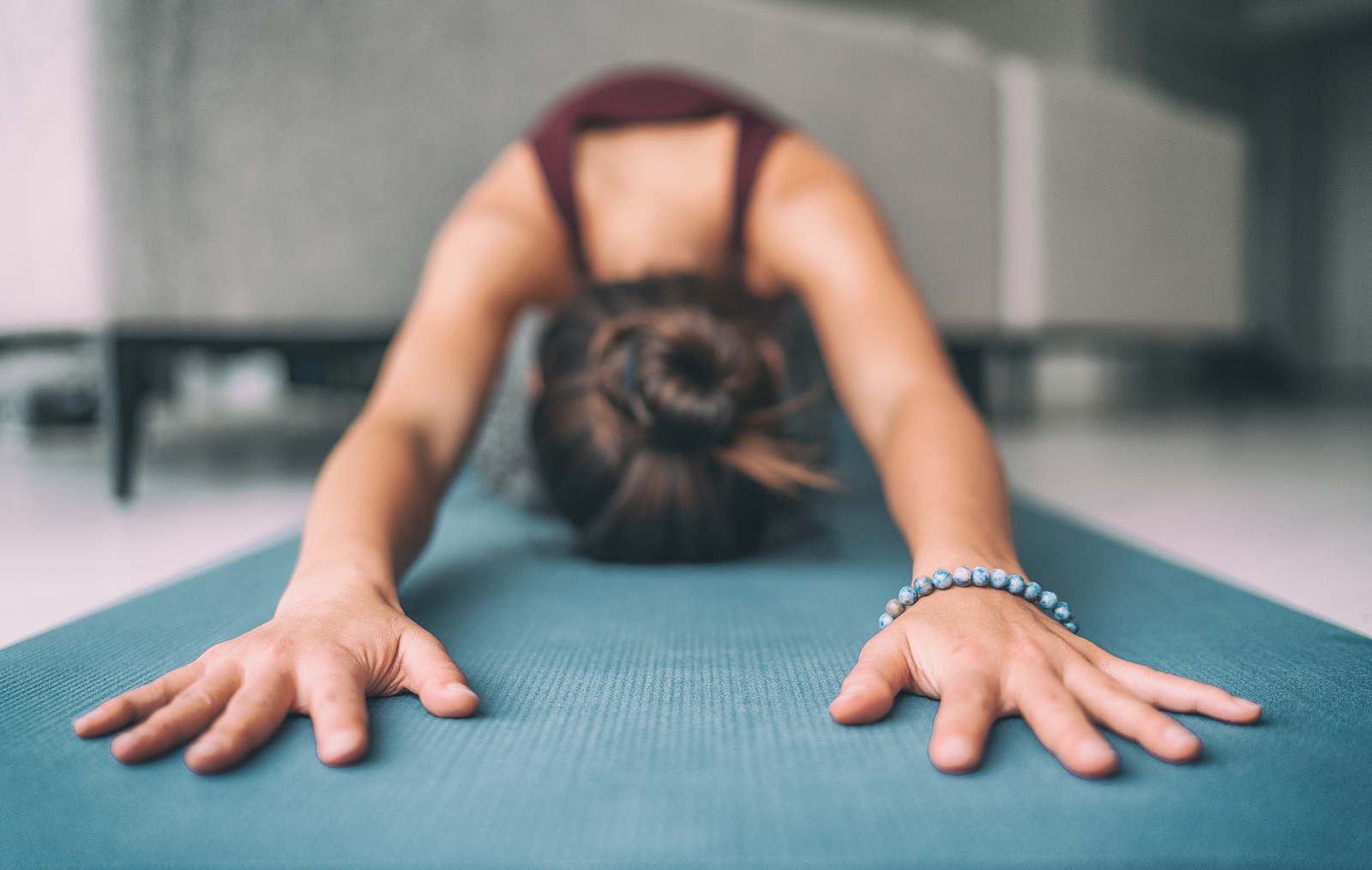 I became more aware of my breathing and used my breathing to move more quickly. Yoga can be a helpful tool in our riding and living toolbox. You can do yoga poses on a horse to help increase flexibility and connection, and yoga practices for beginning or after riding. Use the links provided to get some ideas on what you can do to add yoga to your riding routine or your routine if you do not ride.
- FEI: Yoga for Equestrians
- Horse Illustrated: Yoga for Equestrians
- Horse Rookie: 5 Yoga Poses Equestrians Should Do Before Every Ride
Ready to Experience the Benefits of Mindfulness? Start Working With an Equine Therapist in Richmond, VA
Whether you’re in the saddle or simply searching for more presence in your everyday life, mindfulness is a skill that can quietly transform everything. When you learn to shift your focus from destination to journey, something remarkable begins to happen. Both in the arena and beyond. At Gray Horse Counseling, I blend the natural mindfulness that horses invite with evidence-based therapeutic support. This can help you build that awareness from the inside out. Whether you’re a rider looking to deepen your connection with your horse or someone seeking more calm and clarity in daily life, I’d love to be part of that journey with you.
If you’re ready to experience the grounding, centering benefits of mindfulness, supported by equine-assisted therapy or individual counseling, getting started is straightforward:
- Reach out and let’s talk about where you are. What you’re hoping to cultivate. And how mindfulness-centered therapy can help you get there.
- Learn learn more about my approach as an equine therapist in Richmond, VA, so you feel fully informed and at ease before your first session.
- Step into a practice that meets you where you are and helps you show up with greater presence and intention. For your horse, for others, and for yourself.
Other Services Gray Horse Counseling Offers in Richmond and Throughout Virginia
Equine therapy offers a powerful entry point into mindfulness. It teaches you to slow down, tune in, and respond to life with greater intention rather than reaction. With the right ongoing support, that sense of presence and calm can grow far beyond the barn. Positively impacting every relationship, challenge, and transition you face. Gray Horse Counseling offers a full range of services to help you build on that foundation. These include individual therapy, group therapy, anxiety therapy, trauma therapy, depression treatment, equine sports therapy, EMDR, life transitions therapy, and self-esteem counseling. All available in person in Powhatan, VA, or statewide through online therapy. Browse my FAQs and blog, get to know me, and contact me today to find the support that’s right for you.
Deep breathe and enjoy your ride!!
Courtenay
Grayhorsecounseling.com
About the Author
Courtenay Baber, MS, LPC, is an EAGALA Certified Equine-Assisted Therapist and Licensed Professional Counselor. She has spent nearly two decades helping clients cultivate the kind of mindful presence that transforms both riding and everyday life. She owns and operates her own farm, where horses serve as honest, grounding partners in the therapeutic process. Reflecting back exactly what clients bring into the space and gently guiding them toward greater self-awareness and calm.
Holding a B.S. in Psychology and an M.S. in Rehabilitative Counseling, Courtenay brings a strong clinical foundation to her work. Complemented by Level I and II EMDR training and a deep belief that healing happens when we learn to slow down and truly tune in. Her passion for this work traces back to fifth grade, when a school report on mental health revealed how little compassion existed for those who were struggling. It set her on a lifelong mission to change that. A seasoned clinical supervisor and former educator, Courtenay is as dedicated to modeling mindful, compassionate practice for the next generation of therapists as she is to walking that path alongside every client she serves.