
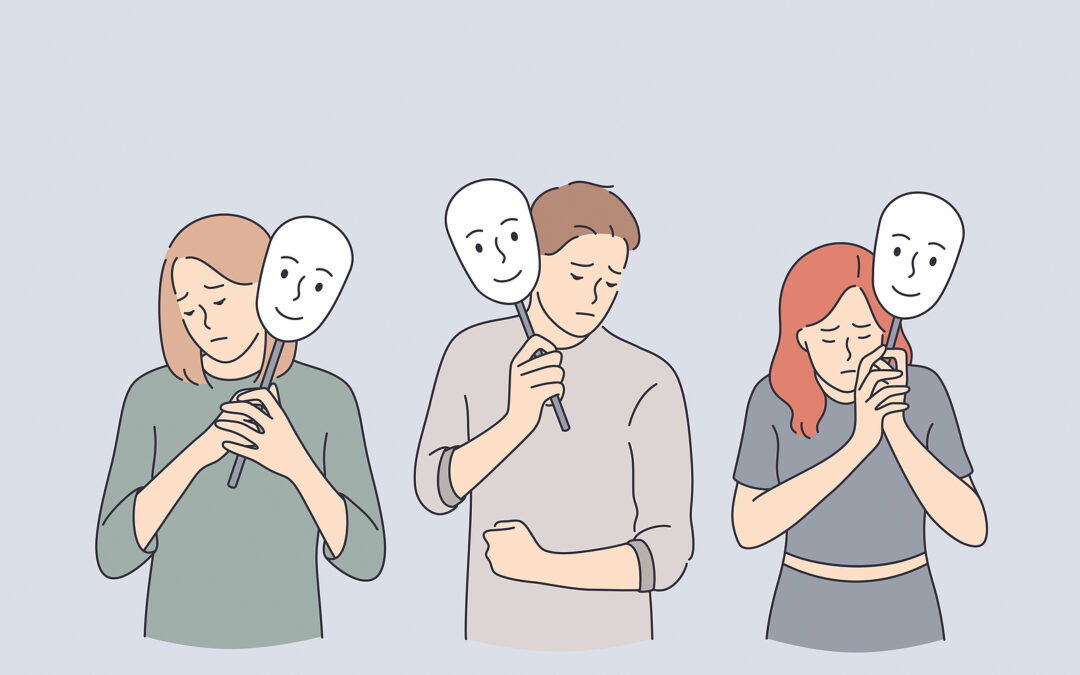
Have you ever noticed that your shoulders creep up toward your ears when you’re stressed? Or that your stomach ties itself in knots before a difficult conversation? Maybe you’ve felt your jaw clench without even realizing it, or found yourself holding your breath during tense moments. These aren’t just random physical reactions—they’re your body trying to tell you something important. Your body remembers things your mind might try to forget.
 Trauma isn’t just stored in our memories or thoughts. It lives in our bodies, tucked away in our muscles, our nervous systems, our very cells. When something overwhelming happens—whether it’s a single traumatic event or the accumulation of stress and difficult experiences over time—our bodies hold onto that experience. We carry it with us, sometimes for years, without even realizing we’re doing it.
Where Trauma Hides
Think about it this way: when something frightening happens, your body goes into survival mode. Your heart races, your muscles tense, you might freeze or prepare to run. This is your nervous system doing exactly what it’s designed to do—protect you. But here’s what often happens: that survival response gets stuck. The threat passes, but your body never fully completes the cycle. It’s like pressing pause on a movie right in the middle of the action scene. Your body is still waiting for permission to finish what it started.
Research in trauma therapy has shown that traumatic experiences can become encoded in our bodies through the nervous system, creating physical patterns that persist long after the original event has passed. That chronic back pain you’ve had for years? The tension headaches that won’t quit? The digestive issues that doctors can’t quite explain? Sometimes, just sometimes, these are your body’s way of holding onto something it hasn’t been able to release.
This isn’t about being weak or broken. This is about being human. Our bodies are incredibly intelligent, and they’re trying to protect us in the only way they know how. The problem is, what was once protective can become a prison if we don’t learn how to release it.
What We Can Learn from Horses
Here’s where things get really interesting. Have you ever watched a horse after a stressful event? Maybe they’ve been startled by something, or they’ve narrowly escaped danger. What do they do? They shake. Their whole body trembles and quivers, starting from their legs and moving through their entire system. They might take some deep breaths, shake their head, or even roll on the ground. Then, just like that, they’re done. They’ve released it. They go back to grazing, to being present, to living in the now.
Animals in the wild naturally discharge traumatic energy through physical shaking and trembling, which helps reset their nervous systems and prevent trauma from becoming stored in the body. Horses don’t hold onto trauma the way we do because they allow their bodies to complete that survival cycle. They don’t think about it, analyze it, or try to control it. They just let their bodies do what they need to do.
We humans? We have learned to suppress this natural response.
We’ve been taught to “calm down,” “pull yourself together,” “stop shaking,” “don’t cry.” We’ve learned that showing these physical responses means we’re out of control or weak. So we hold it in. We tighten up. We push it down. And our bodies? They remember. They hold onto all of that unexpressed energy, and it gets stuck.
Horses show us something profound: healing doesn’t always come from talking or thinking our way through trauma. Sometimes, it comes from allowing our bodies to do what they naturally want to do—to move, to shake, to release. Horses live in the present moment because they don’t carry yesterday’s fears into today. They teach us that we can do the same if we learn to listen to what our bodies are trying to tell us.
When you spend time with a horse, something shifts. These magnificent animals will not respond to you if you’re not being genuine with yourself. They sense when you’re holding tension, when you’re pretending to be okay when you’re not, when you’re carrying something heavy. And they wait. They wait for you to be honest, to be present, to be real. Once you allow yourself that honesty—that’s when the connection happens. That’s when healing can begin. Horses teach us that we can’t heal what we won’t acknowledge, and we can’t release what we’re still trying to control.
Three Ways to Release Stored Trauma
So how do we start letting go of what we’ve been holding onto? Here are three powerful approaches that can help you begin releasing trauma from your body:
1. Somatic Therapy and Body Awareness
Somatic therapy is all about reconnecting with your body and learning its language. This approach focuses on noticing bodily sensations, movements, and patterns that are connected to traumatic memories, helping people process trauma through physical awareness rather than just cognitive processing. In somatic work, you might be asked to notice where you feel tension, what happens in your body when you think about certain things, or how your posture changes in different emotional states.
This isn’t about forcing anything. It’s about curiosity. Where do you hold your stress? What does anxiety feel like in your body? When you feel safe, how does that show up physically? By becoming more aware of these patterns, you can start to shift them. You might learn to breathe into tight spaces, to gently move in ways that release tension, or to simply acknowledge sensations without judgment. Your body has been trying to get your attention—somatic therapy teaches you how to listen.
2. Movement and Breathwork
Sometimes the simplest things are the most powerful. Moving your body—whether through dance, walking, swimming, or even gentle stretching—helps complete those stuck survival responses. Your body was designed to move, and movement helps process and release stored energy. You don’t need to run a marathon or become a yoga expert. Just move in ways that feel good to you.
Think about how horses move when they’re processing something—they walk, they trot, they might run and then slow down. They let their bodies express what they’re feeling through movement. We can do the same. Go for a walk when you’re upset. Dance in your living room. Stretch when you notice tension building. Let your body move the way it wants to move.
Pair this with intentional breathwork, and you’ve got a powerful combination. Breathing exercises can help regulate the nervous system and create a sense of safety in the body, which is essential for trauma release. When we’re traumatized, our breathing becomes shallow and restricted. By learning to breathe deeply and fully again, we signal to our nervous system that we’re safe. Try this: take a deep breath in for four counts, hold for four, exhale for six. That longer exhale activates your parasympathetic nervous system—your body’s natural calming mechanism.
3. Equine-Assisted Therapy
 There’s something about being around horses that creates space for healing in a way that traditional talk therapy sometimes can’t. Equine-assisted therapy combines the wisdom of horses with therapeutic techniques to help you reconnect with your body and release stored trauma. When you work with horses, you’re not just sitting and talking about what happened. You’re moving, you’re being present, you’re experiencing something in real-time.
Horses require us to be genuine, to be in our bodies, to be honest about what we’re feeling. They won’t judge you for shaking, for crying, for being scared. They’ll just wait for you to be real with them. And when you finally allow yourself that authenticity—when you stop trying to control everything and just be—something remarkable happens. The horse mirrors that back to you. They show you that it’s safe to feel, safe to release, safe to just be yourself without all the armor you’ve been carrying.
Working with horses teaches you to be present in your body in a way that few other experiences can. You have to be aware of how you’re standing, how you’re breathing, what energy you’re bringing into the space. A 1200-pound animal has a way of making you very present very quickly. And in that presence, in that genuine connection, trauma starts to lose its grip. You begin to remember what it feels like to be in your body without fear, to take up space without apology, to exist in the present moment without carrying all of yesterday’s pain.
How Therapy Helps
Now, here’s the thing: while these techniques are powerful, working with a trained therapist can make all the difference. Trauma can be tricky, and sometimes when we start to release it, unexpected emotions or memories can surface. Having someone there who understands the process, who can hold space for you, and who knows how to help you navigate whatever comes up—that’s invaluable.
A good trauma therapist doesn’t just talk at you or give you advice. They help you reconnect with your body in a safe, supported environment. They understand that healing isn’t linear, that some days will be harder than others, and that your body’s timeline for healing might be different from your mind’s timeline. A trauma therapist can guide you through body-based techniques while ensuring you don’t get overwhelmed.
Therapy also provides something we often don’t give ourselves: permission. The permission to feel what we feel. Permission to shake, to cry, to be angry, to take up space with our pain. Permission to heal at our own pace. Sometimes that’s the missing piece—not someone to fix us, but someone to witness us as we learn to fix ourselves.
The right therapist understands that trauma isn’t just a mental health issue—it’s a whole-body experience that requires a whole-body approach to healing. They know that sometimes you need to move before you can talk, that sometimes you need to feel before you can think, that sometimes you need to shake before you can be still.
Coming Home to Your Body
The journey of releasing trauma from your body isn’t always easy, but it’s one of the most worthwhile things you can do for yourself. Your body has been carrying this burden, trying to protect you, doing its best with the tools it has. Now it’s time to give your body what it needs—the chance to complete what it started, to shake off what it’s been holding, to finally relax into the present moment.
Just like those horses who shake and then go back to grazing, peaceful and present, you too can learn to let go. Your body knows how. It’s been trying to tell you all along. All you need to do is listen, be patient with yourself, and take that first step toward healing.
 If you’re ready to start this journey, to reconnect with your body and release what you’ve been carrying, therapy can help. You don’t have to do this alone. You don’t have to keep holding on. There’s a way forward, and it starts with honoring what your body has been trying to tell you all along.
Because here’s the truth: you deserve to feel at home in your own skin. You deserve to move through the world without carrying yesterday’s pain into today. You deserve to shake off what no longer serves you and step into the lightness of healing.
Start Working With a Trauma Therapist in Powhatan, VA
Your body is ready. The question is: are you? If you are ready to find support in releasing past trauma, you can start your therapy journey with Gray Horse Counseling by following these simple steps:
- Contact me to schedule your free consultation
- Read my FAQs and learn more about me
- Start overcoming the effects of past trauma!
Other Services Offered by Gray Horse Counseling
Trauma therapy is one of the many services offered by Gray Horse Counseling. I’m happy to offer both in-person and online support across Powhatan, Richmond, New Kent, and across the state. Other services offered include equine-assisted therapy, individual therapy, life transitions therapy, group therapy, EMDR therapy, clinical supervision, equine therapy, and depression treatment. Check out my FAQs, read about me, and contact me today to get the help you deserve!